

Robot Market Data Practice: Reshape Before Aggregating
2026-11-03
Robot Market Data Practice: Reshape Before Aggregating
A robotics market table may arrive with one row for each reported observation, while an editor wants a display with years across the columns. Changing that layout sounds straightforward until several rows would occupy the same displayed cell. The important decision is then whether those rows describe duplicate records, different populations or observations that genuinely belong in an agreed aggregation. This practical method separates that decision from the mechanics of reshaping a table.
Describe what one destination cell should mean
Start with a written statement such as: one cell represents a specified measure for one geography, reference year and defined population. Treat this as an illustrative design statement, not as a description of a dataset supplied here. Name the unit, source edition and any classification that distinguishes observations. A year and a geography alone may be insufficient to identify the intended value.
Inspect the delivered field definitions before dropping columns from the display. A column that appears to be a secondary note may distinguish actual observations from forecasts or one population from another. Preserve those distinctions in the working data even when the final display presents a simplified layout. The publication needs to explain how its cell definition relates to the source's own records.
Look for repeated cell keys before choosing a function
Construct the set of fields that identifies a destination cell and inspect repeated combinations. For each repeated combination, retain the original rows and relevant source notes. Do not delete one row just because the display cannot accommodate it. A repeated combination can indicate that the proposed cell definition is too broad rather than that the source contains a mistake.
Ask whether an omitted category, source edition or observation status distinguishes the rows. If so, revise the display or retain an additional panel instead of forcing the observations together. Where two rows appear to be repeated copies of the same source record, document how that interpretation was established. The decision should remain traceable to the delivered records.

Use a layout operation when each cell has one value
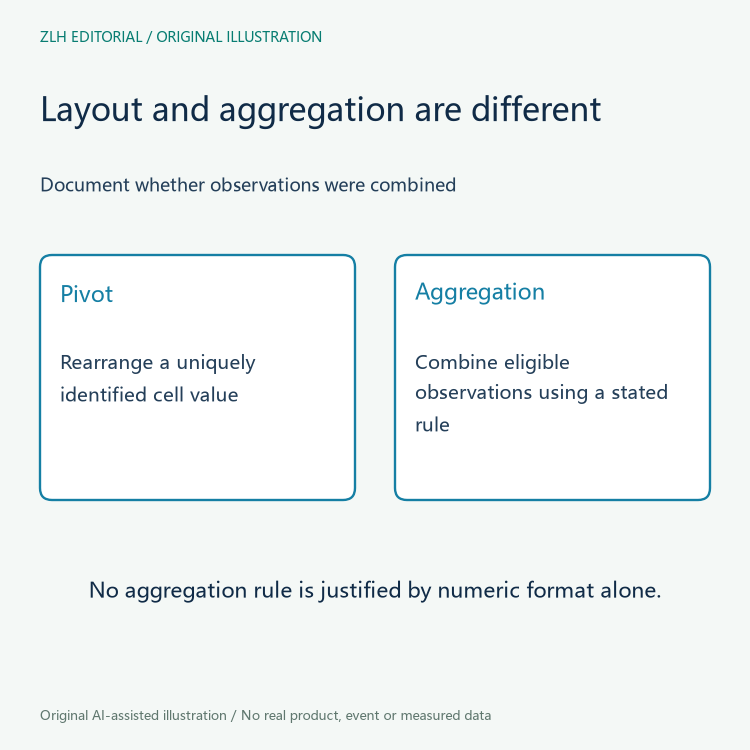
The pandas DataFrame.pivot reference describes reshaping without aggregation and documents an error when index and column combinations have multiple values. That behavior can expose an unresolved cell definition. It should not automatically trigger a switch to a different function merely to obtain a rectangular output.
For a working table that has one value per intended cell, specify the row identifiers, column identifier and value field explicitly. Retain the source selection and the transformation statement with the resulting table. Compare selected output cells back to their original rows. A successful layout operation changes representation; it does not independently establish the correctness of the underlying robotics measure.
Require an aggregation rule before combining observations
The pandas pivot_table reference describes an aggregation operation, with mean as the documented default aggregation function. That is a meaningful statistical choice. Applying it without a reason can turn an unresolved group of observations into a plausible-looking cell whose meaning the article never defines.
If aggregation is justified, write down the eligible rows, operation, unit and missing-value treatment before calculating. Counts from overlapping populations should not be summed simply because the values are numeric. Likewise, averaging different measures or editions needs an explicit interpretation. Ask the responsible analyst or source owner for clarification when the field documentation does not support the proposed combination.
Keep the display and its transformation note together
A useful note identifies the input selection, destination cell definition, repeated-key review and operation actually used. Say whether the operation only rearranged observations or combined them under a stated rule. Preserve the working rows so that another editor can follow a displayed value back to its sources. If a cell remains unresolved, describe the unresolved combination instead of publishing an unexplained number.
Before distributing the display, ask a second reader to explain one cell using only its heading and method note. If the reader cannot identify the measure, population and operation, revise the explanation. This is an editorial clarity check, not a substitute for inspecting the underlying rows or validating the statistical method.
When the next edition arrives, repeat the key inspection before reusing the transformation. New categories can change uniqueness even when the column headings look familiar. Compare the source definitions and retain any revised rule. An old spreadsheet shape is not a reason to erase distinctions introduced in a newer delivery.
No market table was transformed for this article, and its original illustrations contain no fabricated values. More methods appear in the robotics market data collection and article directory. Defining a cell before choosing a reshaping function makes the final layout easier to explain and prevents an accidental aggregation from becoming an unsupported market claim.


